

Set Up a Mobile Tool Kit for Real Contamination Boundaries
Separate clean, used and faulty items by their actual condition, even when storage space is limited.
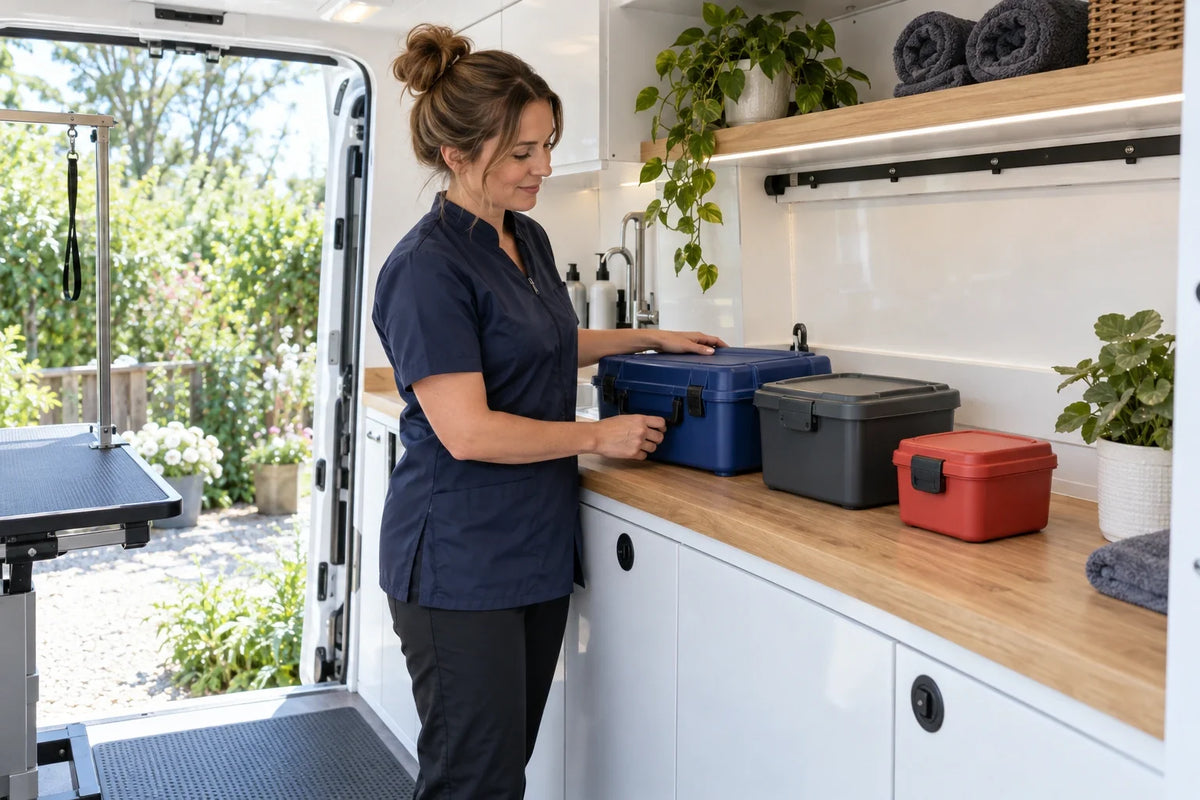
A compact mobile kit needs more than a place for every tool. It needs a clear route for equipment that is ready to use, equipment awaiting cleaning and equipment that must not return to service. If those states share the same pouch, a tidy interior can hide a poor handover.
Trace one comb through the whole mobile workflow
Rehearse this with no animal present, using an item clearly designated for the rehearsal. Trace it through the full route rather than only checking the start-of-day case:
- Ready: identify the processed, dry, inspected item and its clean storage location.
- Used: place the rehearsal item in the separate awaiting-processing route. Note surfaces and containers it touches.
- Processing: follow the compatible tool-care procedure and chemical label where disinfection is required. Complete the applicable stages before returning it to ready storage.
- Fault: rehearse identifying a damaged item and putting it in quarantine, with a service note, instead of through routine processing.
Now ask where an item could be mistaken for ready: a shared towel, an unlabelled pouch, a temporary shelf or an interrupted end-of-day routine. Fix the specific boundary and repeat the walkthrough.
Endpoint: another team member can identify each item's state and next action without relying on your memory. This checks workflow clarity; it does not test microbial cleanliness or establish that a container makes tools sterile.
Define the states before choosing containers
Use the salon’s supported hygiene procedures to define when an item is ready for use. “Looks clean” and “was wiped” are not complete process records. Identify the relevant cleaning, disinfection where required, drying, inspection and storage steps for each tool.
Keep blade, scissor and comb care instructions accessible. A method suitable for one surface or component may not be suitable for another. Do not immerse electrical equipment or apply an unsupported chemical because it fits the storage routine.
Give used equipment a separate destination
Prepare a physically separate appropriate container for items awaiting processing. The clean case should not become the temporary home for a used comb while you finish the dog. Include the surfaces and handling involved in moving the item, not just the item itself.
Choose containers and positions that can be managed safely within the vehicle. Avoid loose sharp tools, open blades near the animal or a container likely to spill during travel. A colour cue can help, but every user must understand what the cue means.
Keep faulty items out of both routes
Use a separate quarantine location for damaged or suspect equipment, with a clear private fault record. A blade awaiting service should not be mixed with routine used equipment and then returned to the clean case after a wipe.
Record the item’s identity, fault observation and next inspection. The endpoint is a supported service or replacement decision, not simply that the item has been stored out of sight.
Check the process against the label
CDC guidance explains that soil and access to surfaces affect disinfection. It concerns healthcare equipment and does not validate a grooming-van protocol. For your actual process, follow the chemical label, tool manufacturer instructions and relevant local requirements.
Do not substitute a quick spray for the specified preparation and contact time. Do not mix chemicals, guess dilution or assume a surface product is approved for skin or every blade component. Resolve incompatible instructions with the relevant supplier before using that combination.
Store by compatibility as well as cleanliness
Within the ready-to-use route, separate A5, D-Series, FlexFit PRO and wide assemblies clearly. The VUNRO Universal Guard Comb Set has specified compatible bases; “Universal” does not mean every tool in the case.
A clean wrong-family blade remains the wrong blade. Name the exact assembly at handover rather than relying on a familiar colour.
Walk the route before relying on it
With no animal present, rehearse removing a ready tool, placing it in the used route and identifying a suspect item. Check where your hands, work surfaces and containers are involved. Include end-of-day processing and safe transport, not only the start of a groom.
Record a process failure and change the relevant boundary. Three attractive cases are useful only when the actual workflow keeps their contents in the intended states.
Sources and scope
Lantra’s styling and finishing standard includes maintaining equipment and appropriate hygiene. The storage layout here is a practical workflow proposal, not evidence that any case or chemical makes equipment sterile. Product details follow the linked VUNRO specifications.
Keep learning
More from the Blade Blog

Choose VUNRO Grooming Scissors for a Named Task
Read the guide →
Which VUNRO Grooming Comb Fits Your Work?
Read the guide →


